
Swollen gums: what causes them and when to worry
Swollen gums have seven common causes, from trapped food to infection. Learn which ones clear up at home, which need a dentist, and which are emergencies.
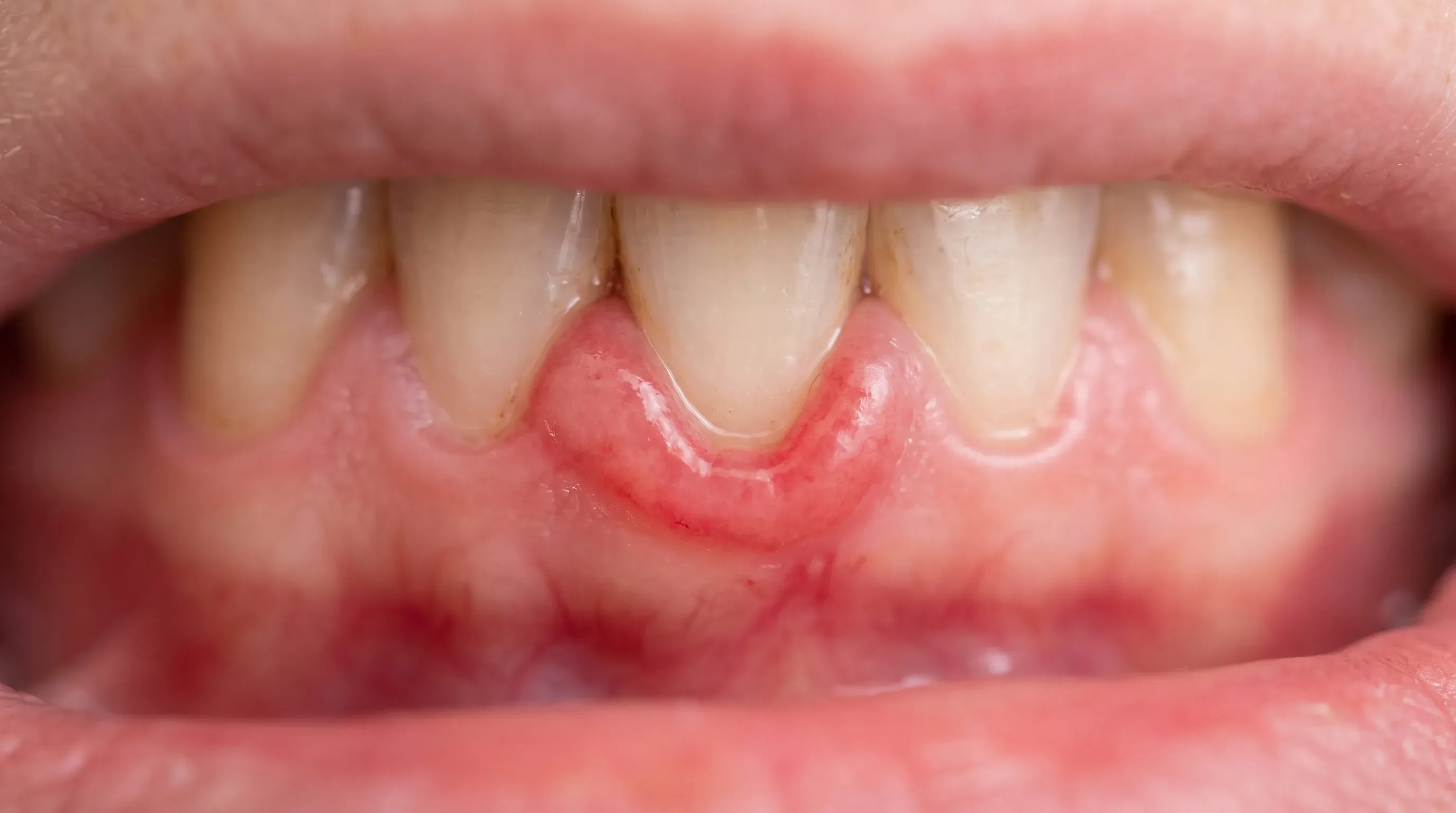
Your gum is puffy, red, and tender. Maybe it bleeds when you brush. Maybe it is one spot around a single tooth, maybe the whole gumline.
Swollen gums are one of the most common reasons people search for a dentist. The useful question is not what causes gum swelling in general. It is which of the seven causes is yours, because some clear up in a week at home and one of them belongs in an emergency chair today.
First, the part that decides everything
Healthy gums are firm, pale pink, and sit tight against the tooth. They do not bleed when you brush.
Swelling is inflammation, which means your body is reacting to something. Get rid of the something and the swelling goes. That is why the fix depends entirely on the cause, and why rinsing alone works in some cases and does nothing in others.
The seven causes, from most to least common
1. Gingivitis
The leading cause by a wide margin. Plaque builds up along the gumline, the gums get red, puffy, and bleed easily.
The good news is that gingivitis is fully reversible. No permanent damage yet. Better brushing, daily flossing, and a professional cleaning usually turn it around in a couple of weeks.
Left alone, it advances into periodontitis, which is not reversible. Our guide on gingivitis vs periodontitis explains where that line sits.
2. Trapped food
A popcorn hull, a seed, a shred of meat pushed under the gumline. The gum reacts around one specific spot.
This is the happiest diagnosis on the list. Careful flossing gets it out and the swelling settles in a day or two.
3. Tartar below the gumline
Plaque that hardened. Once it is tartar, brushing will not remove it, and it sits there irritating the gum continuously.
This is the most common reason someone with genuinely good habits still has swollen gums. It needs a deep cleaning to come off.
4. A tooth abscess
Infection at the root. This one usually announces itself: throbbing pain, a bad taste, sometimes a pimple-like bump on the gum that drains.
An abscess does not resolve on its own. Read gum abscess symptoms and treatment for the danger signs.
5. A wisdom tooth coming in
A partially erupted wisdom tooth leaves a flap of gum over it that traps food where no brush reaches. It flares, calms down, and flares again.
6. Hormonal changes
Pregnancy, puberty, and menopause all make gum tissue respond more strongly to the same plaque. Pregnancy gingivitis is common in the second trimester and is worth treating, not waiting out.
7. Medications and medical conditions
Some blood pressure drugs, anti-seizure medications, and immunosuppressants cause gum overgrowth. Dry mouth from any medication raises risk. Uncontrolled diabetes and vitamin C deficiency both show up in the gums.
If your gums changed after starting a new medication, mention it. That connection is easy to miss and it changes what we recommend.
When it is one tooth versus the whole mouth
This distinction narrows things down faster than anything else.
The whole gumline is puffy and bleeds when you brush. That pattern points to plaque, tartar, hormones, or a medication. It is usually gingivitis and usually manageable.
One spot around one tooth points to something local: trapped food, a cracked tooth, decay, a failing filling or crown with a gap underneath, an abscess, or a wisdom tooth.
One-tooth swelling deserves attention sooner. A single inflamed site is more often an infection than a hygiene problem.
What to do at home right now
Warm salt water rinse. Half a teaspoon in a cup of warm water, two or three times a day. Cheap, and it calms the tissue.
Floss the area gently. If it bleeds a little, that is the inflammation, not damage. Bleeding usually decreases over several days of consistent flossing.
Soft brush, light pressure. Scrubbing harder makes swollen gums worse.
Cold compress on the cheek, ten minutes at a time.
Do not put aspirin directly on the gum. It burns the tissue and creates a second problem. And do not mask it with painkillers for a week while the cause keeps working.
When to call us
Same day if you have facial swelling, fever, trouble swallowing or opening your mouth, or severe throbbing pain. Those suggest a spreading infection. Our guide on dental emergencies covers what counts as urgent.
This week if there is a bump on the gum that drains, a bad taste that keeps coming back, a loose tooth, or swelling around one tooth with pain.
At your next opening if the swelling has lasted more than two weeks despite good home care, if your gums bleed every time you brush, or if they are receding.
Two weeks is the honest cutoff. Gums that are still swollen after two weeks of real home care are telling you the cause is mechanical, and no amount of rinsing removes tartar or fixes a cracked tooth.
What happens at the visit
We find the cause before treating anything. That means checking the gum pockets with a small probe, an x-ray if we suspect an abscess or bone loss, and a look at the tooth itself for cracks or a failing restoration.
Trapped debris comes out that day. Tartar comes off with a cleaning or a deep cleaning depending on how far under it sits. An abscess needs the infection addressed at the source, not just antibiotics. A cracked tooth or leaking filling gets repaired.
Call (352) 717-2177 or book an appointment. Neola Dental serves Minneola, Clermont, Groveland, Winter Garden, and the rest of Lake County, with a bilingual team in English and Spanish.
Frequently asked questions
Will swollen gums heal on their own?
Sometimes. If the cause is trapped food or a few days of rushed brushing, gums often settle within a week once you clean the area properly and floss carefully. If the swelling is caused by tartar under the gumline, an infection, or a cracked tooth, it will not resolve on its own no matter how well you brush, because the trigger is still there. The rule we give patients is simple: two weeks of good home care with no improvement means something mechanical is going on and it needs to be looked at.
Why is my gum swollen around just one tooth?
Swelling in one spot points to a local cause rather than a whole-mouth problem. The usual suspects are food wedged between the tooth and gum, a cracked or decayed tooth, an abscess at the root, a failing old filling or crown with a gap, or a partially erupted wisdom tooth. One-tooth swelling deserves attention sooner than general puffiness, because a single inflamed site is more often an infection. If it comes with throbbing pain, a bad taste, or a bump on the gum, call us the same day.
How do I get rid of swollen gums fast?
Rinse with warm salt water, half a teaspoon in a cup of water, two or three times a day. Floss the area gently to clear anything trapped, even if it bleeds a little at first, since bleeding usually means inflammation rather than damage. Use a soft brush and stop scrubbing hard. A cold compress on the cheek helps the swelling. What you should not do is put aspirin directly on the gum, which burns the tissue, or ignore it while taking painkillers for a week.
Can swollen gums be a sign of something serious?
Usually it is gingivitis, which is reversible. But persistent swelling can signal advancing gum disease, a tooth abscess, or, rarely, a medical issue such as a vitamin deficiency, a medication side effect, or leukemia. Swelling that does not respond to care, bleeds heavily, or comes with loose teeth needs evaluation. Facial swelling, fever, or trouble swallowing means a spreading infection and is an emergency, not a wait-and-see.
Are swollen gums normal during pregnancy?
Common, yes, and worth managing. Hormonal shifts make gum tissue react more strongly to the same amount of plaque, which is called pregnancy gingivitis and often shows up in the second trimester. It is not something to ignore, since untreated gum disease during pregnancy is associated with preterm birth and low birth weight. Cleanings are safe while pregnant. Tell us you are expecting and we will adjust timing and positioning for comfort.
Does swollen gum around a wisdom tooth need treatment?
Often yes. A partially erupted wisdom tooth leaves a flap of gum that traps food and bacteria in a spot no toothbrush reaches. That is pericoronitis, and it tends to flare, settle, and flare again. Rinsing helps a flare-up, but the pattern usually repeats until the tooth is either fully erupted or removed. If you are getting repeat episodes with pain and swelling at the back of your jaw, an evaluation tells you which of the two is coming.