
How to fix a cracked tooth: your complete guide
How to fix a cracked tooth: types, diagnosis & treatment options from bonding to implants. Get expert care at Neola Dental in Minneola, FL!
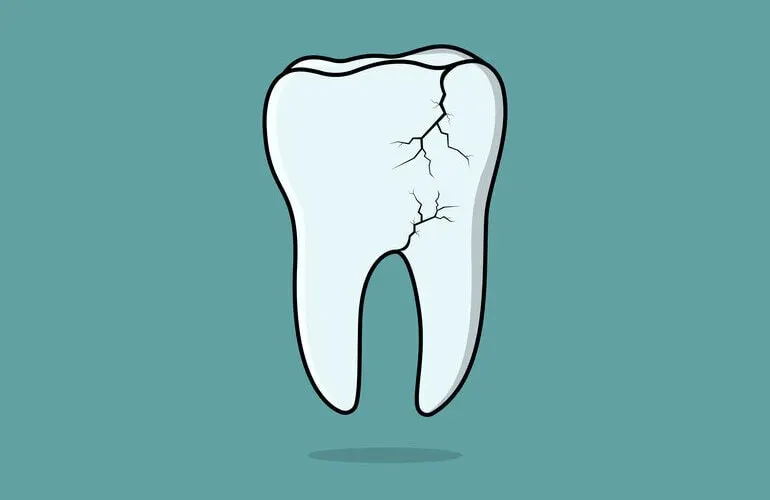
A cracked tooth can hurt when you chew, show a visible line, or do neither and still need attention. If you are wondering how to fix a cracked tooth, the answer depends on the type of crack and how deep it goes. Left untreated, a crack can lead to further dental problems. This article covers the types of cracks, how a dentist diagnoses them, the five treatments, and what to do in the first hours.
Understanding cracked teeth
Dentists sort cracks by severity and location. Knowing the type of crack is what determines the treatment, so it is the first thing to find out. These are the common types.
Types of cracks
- Craze lines are tiny surface cracks that don't affect the tooth's function or cause pain. They are usually cosmetic and can be treated with simple procedures like dental polishing.
- A fractured cusp happens when part of the tooth's chewing surface breaks off. It may or may not hurt, and it can often be treated with dental bonding or a crown.
- Cracked tooth syndrome is a crack that runs vertically from the chewing surface down into the tooth. It causes pain when chewing or biting, often because the crack affects the tooth's pulp.
- A split tooth is divided into two pieces. This is a severe form of cracking, and it often requires extraction and possibly dental implants.
Diagnosing a cracked tooth
If you suspect a crack, see your dentist for an evaluation. Here is how the diagnosis usually goes.
Dental examination
The dentist starts with a visual exam to judge the crack's size, location, and depth. They may also check for sensitivity or discomfort when you bite or chew.
Transillumination and staining dyes
In some cases, dentists shine a special light through the tooth (transillumination) to make cracks easier to see. Staining dyes can also be applied to show cracks that the naked eye misses.
X-rays and 3D scans
For deeper cracks, X-rays or 3D scans show whether the crack has reached the pulp or root. These images help in planning the right treatment.
Checking for inflammation
The dentist also looks for inflammation or infection around the tooth. Swelling or redness in the surrounding gums can mean the crack has exposed the pulp to bacteria, which may call for more advanced treatment.
Five treatment options for a cracked tooth
The right treatment depends on the severity of the crack, where the damage is, and the condition of the tooth.
1. Dental bonding and contouring
For minor cracks or cosmetic imperfections, bonding is simple and quick. The dentist applies tooth-colored resin to the crack and hardens it with a special light. Bonding is usually quick, affordable, and suitable for cracks on the front teeth.
2. Dental crowns: how to fix a cracked front tooth
For larger cracks, especially on the front teeth, a dental crown may be necessary. A crown is a custom-made cap that fits over the damaged tooth and restores its shape, strength, and appearance. Crowns are particularly effective for cracked teeth that need extra support to avoid further breakage.
3. Porcelain veneers
Porcelain veneers are thin, custom-made shells that cover the front surface of the tooth. They are a good choice for restoring a cracked tooth when you also want to improve the look of your smile while fixing the crack. Veneers are highly durable, stain-resistant, and natural-looking.
4. Root canal therapy
If the crack has reached the pulp (the soft tissue inside the tooth), root canal therapy may be necessary. The infected or damaged pulp is removed and the space is sealed with a filling. After the root canal, the tooth is often restored with a crown for strength and function.
5. Tooth extraction and dental implants
When the tooth is beyond repair, tooth extraction may be necessary. A dental implant can then replace both the function and the look of the tooth. It is a permanent solution: a titanium post goes into the jawbone, followed by a custom-made crown.
Immediate steps for a broken or cracked tooth
If you have a cracked tooth, acting quickly can help prevent further damage and ease the pain. Here are the steps to take right away.
Save the broken piece in milk or saliva
If a piece of the tooth breaks off, keep it and place it in milk or saliva. That keeps the fragment moist for possible reattachment by your dentist.
Rinse your mouth and apply a cold compress
Rinse your mouth with warm water to clean the area, and hold a cold compress to the outside of your cheek to reduce swelling and pain. Don't put ice directly on the tooth, as it can worsen the discomfort.
Contact a dentist promptly
Cracked teeth require immediate professional care. Call your dentist as soon as possible to schedule an emergency appointment. The sooner you are seen, the better the chance of keeping the tooth and avoiding infection.
When to seek professional dental care
A minor crack may not need immediate care, but any crack that causes pain or discomfort should be seen as soon as possible. Ignoring a cracked tooth can lead to further damage, including infection, tooth decay, or tooth loss.
Why a small crack should not wait
Even if the crack looks small, have it checked right away. A crack can deepen over time, and bacteria can enter the tooth's pulp and cause an infection. The earlier you are treated, the better the outcome for the tooth.
How long does it take to fix a cracked tooth?
The time it takes depends on the severity of the crack and the treatment required. Minor cracks that need bonding can often be handled in one visit, typically 30 minutes to an hour.
More complex treatments such as crowns, veneers, and root canals take longer. A crown may need two appointments: one to prepare the tooth and take impressions, and a second to place the custom-made crown. Root canal therapy can take 1 to 2 hours for the procedure itself, with a follow-up appointment for the crown. When extraction and an implant are needed, the process can take several weeks, because the implant needs time to integrate with the jawbone.
At Neola Dental in Minneola, our team can walk you through bonding, crowns, or the more advanced procedures if you are wondering how to fix a cracked tooth, and we can recommend a treatment that restores both function and appearance. Explore our dental services or call us to book a visit before the crack gets worse.