
How do clear aligners work? A complete guide to straighter teeth
Discover how clear aligners work to straighten your teeth. Learn about their design, benefits, and what to expect during treatment.
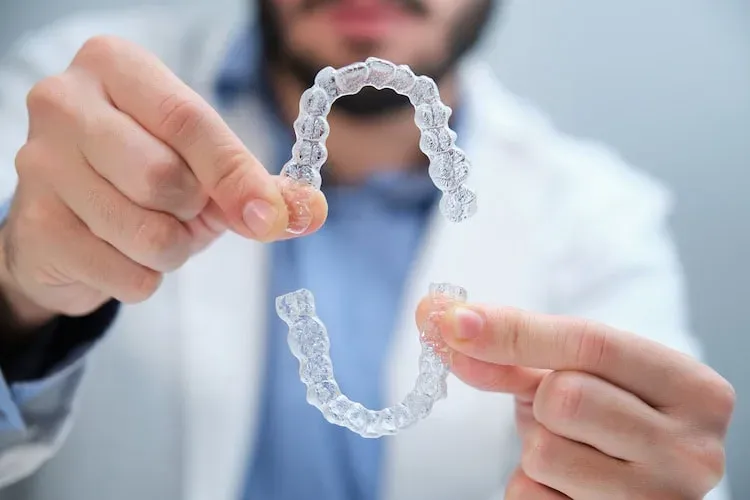
If you've ever wondered how clear aligners work, you're in good company. These nearly invisible orthodontic trays straighten teeth without metal wires or brackets, and you take them out to eat and brush. Most people finish treatment in 6 to 18 months.
Are you considering orthodontic treatment for yourself or a loved one? This guide covers what clear aligners are, how they move your teeth, what the treatment process looks like, and how to care for them.
What clear aligners are
Definition and purpose
Clear aligners, also called invisible aligners or invisible braces, are transparent, removable trays that dentists custom-make to fit your teeth. According to the American Association of Orthodontists, their purpose is to gently shift your teeth into better alignment over time.
They correct crooked teeth, gaps, overcrowding, and some bite problems. Unlike traditional metal braces, which stay fixed to your teeth, aligners come out during meals and while brushing.
Clear aligners compared to traditional braces
Traditional braces use metal brackets and wires glued to the teeth, and an orthodontist adjusts them by hand over time. They work well, but they can be uncomfortable and make cleaning harder.
Aligners use smooth plastic, which reduces irritation to cheeks and gums. Because you remove them to eat or brush, oral hygiene is much easier. For many adults and teens, straightening teeth discreetly is a major advantage.
Materials
Manufacturers make clear aligners from medical-grade, BPA-free thermoplastic. The plastic applies steady pressure on the teeth and stays flexible enough to put in and take out. Dentists design the aligners from 3D digital scans of your mouth, which map the exact movements needed for a straighter smile.
Each aligner differs slightly from the last, and each one moves specific teeth a small step. Because the plan comes from digital scans, the movements stay precise from the first tray to the last, and the design is safe for daily wear.
The treatment process
Initial consultation
The first step is a professional consultation. Your dentist or orthodontist evaluates your teeth and bite and decides whether you're a good candidate for clear aligners. That usually involves digital scans, X-rays, and photographs of your mouth.
The visit also identifies your orthodontic issue type, such as crowding, gaps, or a bite problem. Your dentist discusses your goals, answers your questions, and explains the treatment process in detail.
Customization
Once your provider approves you for treatment, they use 3D imaging to create a detailed movement map showing how your teeth should shift throughout treatment. Based on that map, a lab manufactures a series of custom aligner trays.
You wear each tray for one to two weeks. Each one moves your teeth slightly from their current position, and the number of trays depends on how complex your case is.
Treatment timeline
Treatment time varies with individual needs, but most people finish within 6 to 18 months. The process divides into stages, and each stage uses a new set of aligners. You wear each set for about 20 to 22 hours a day and remove it only to eat, drink, brush, and floss.
Every new aligner continues the work of the previous one and moves your teeth a little closer to the final alignment. Check-ins happen every 6 to 8 weeks, so your dentist can monitor progress and make adjustments.
How clear aligners move teeth
Gentle force, tray by tray
So how do clear aligners work to move teeth? The answer lies in biomechanics. Each tray applies gentle, controlled force to specific teeth. When you start a new set, it nudges your teeth toward the next step of the plan.
Your teeth respond to that pressure: the bone around them remodels and reshapes to support the new position. The remodeling happens gradually, and the aligner sequence guides it. With consistent wear, your teeth slowly move into alignment, which improves both your appearance and your oral health.
The order of the trays
The first tray typically addresses the most noticeable misalignments, and later trays fine-tune the movement, a few millimeters at a time. You need to wear them in the correct order and for the recommended hours each day.
Skipping a tray or wearing them inconsistently causes delays or setbacks, because your teeth only move as planned when each tray is worn in sequence. Think of the aligners as steps on a staircase, each one a little closer to the smile you planned. Every tray builds on the one before it, so the sequence matters as much as the hours.
Benefits
Appearance
Patients choose clear aligners mainly because they're discreet. The transparent plastic is hardly noticeable when worn, so adults and teens can improve their smiles without drawing attention to the treatment. Nobody has to see brackets or wires in your photos.
You can give a work presentation or attend a social event and smile with confidence while the aligners do their work.
Comfort and convenience
No brackets break and no wires poke your cheeks, and the smooth plastic reduces irritation. You can take the aligners out and eat your favorite foods without restrictions.
You brush and floss as usual, which helps you keep up better oral hygiene during treatment. There are also no emergency visits for broken parts, which saves you time and stress.
Limitations
Cases aligners may not suit
Clear aligners effectively treat many alignment problems, but they may not suit severe or complex cases. Large overbites, rotated teeth, or major jaw misalignments may require different treatment.
In those situations, traditional braces or a combined treatment may give better results. Your provider assesses your case and recommends the best option.
Wear time depends on you
Unlike fixed braces, aligners rely on patient discipline. Since you can remove them, success depends on wearing them at least 20 to 22 hours a day.
Removing them too often or forgetting to wear them slows your progress and may compromise your results. Follow your treatment plan and attend every scheduled appointment, including the check-ins every 6 to 8 weeks.
Cleaning and care
Cleaning and storage
Clean your aligners at least twice a day with a soft toothbrush and clear, mild soap or an aligner-specific cleaning solution. Avoid toothpaste, which can scratch the plastic.
Rinse the aligners after you remove them and before you put them back in. When they're not in your mouth, keep them in their protective case so they don't get damaged or lost.
Oral hygiene
You take the aligners out to eat, so brush and floss after every meal before reinserting them. Skipping this step traps food particles and bacteria against your teeth and raises the risk of cavities, staining, or gum problems.
Drink only water while wearing aligners, and keep up with regular dental checkups. These habits keep your smile healthy throughout the process.
Book a consultation
Every smile is unique, and so is every aligner treatment plan. The team at Neola Dental in Minneola, FL evaluates your oral health, listens to your goals, and recommends the best treatment path. Whether you're a candidate for clear aligners or need a different solution, we guide you every step of the way.
See our Invisalign services or schedule a consultation to find out how clear aligners work for your specific case.