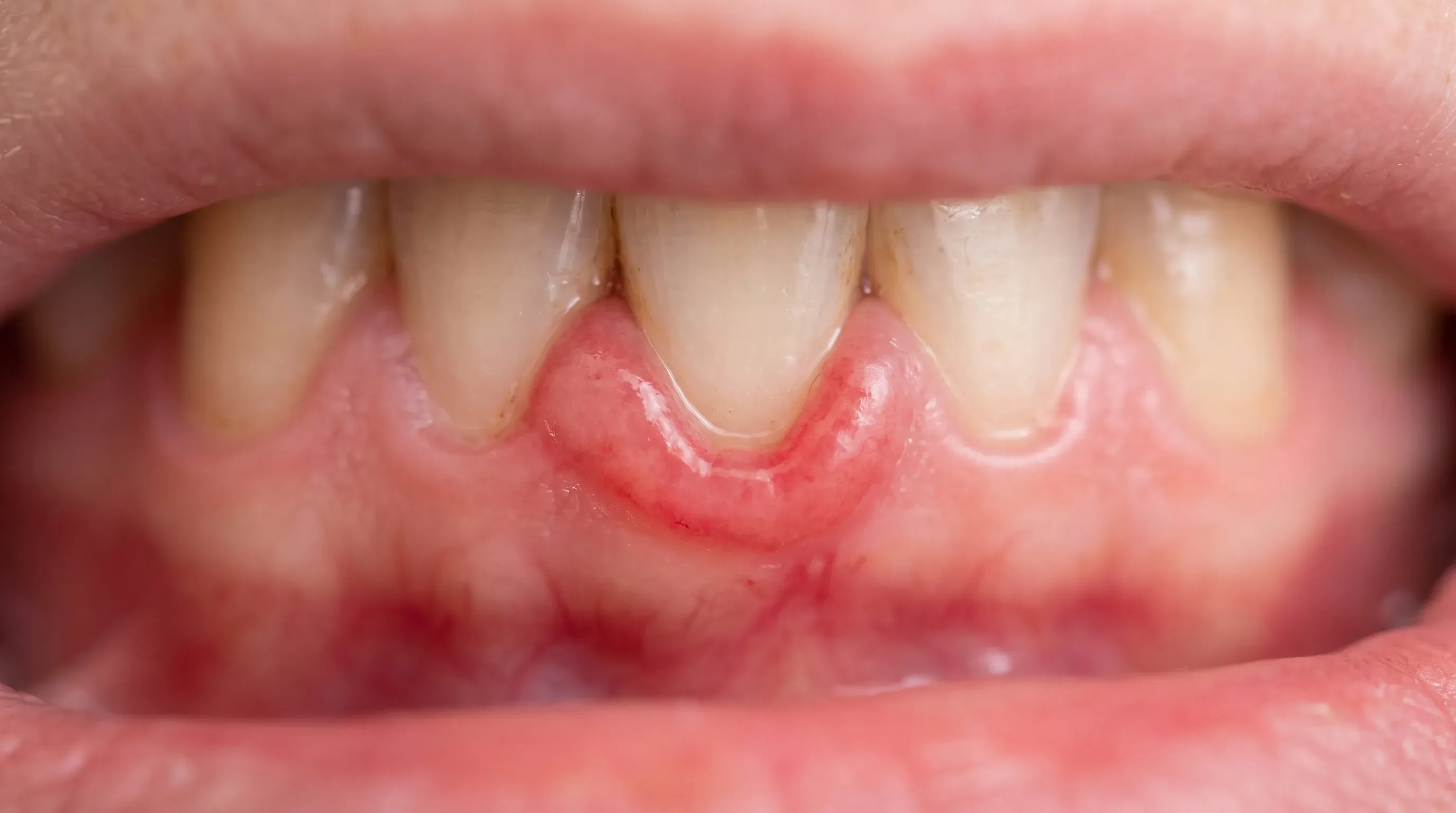
Black Spots on Teeth That Aren't Cavities: How to Tell
Not every dark spot means a cavity. Learn the smooth-vs-rough test to tell stains, tartar, and fluorosis apart from decay, and when to call a dentist.

A black spot on a tooth is not always a cavity. It can be tartar buildup, a stain from coffee or wine, fluorosis, or in children, a common bacterial stain called black line. The clue is texture: cavities feel rough or sticky and often hurt. Stains stay smooth and painless.
If you just noticed a dark mark and your first reaction was panic, take a breath. Most of the time, the spot you are looking at formed slowly, from something completely unrelated to decay. Here is how to tell the difference yourself, and when it is worth a quick check with a dentist.
How Can You Tell If a Black Spot Is a Cavity or Just a Stain?
Run your tongue over the spot, or look at it closely in good light. Two things matter most: texture and change over time.
A spot that is probably just staining feels smooth to your tongue or a fingernail. It has not changed shape or size in weeks or months, and it does not hurt with hot, cold, or sweet food. A spot that is more likely decay feels rough or slightly sticky, seems to be growing, or comes with a twinge of sensitivity.
Signs it is probably a stain or deposit
- Surface texture: Smooth
- Change over time: Stays the same
- Pain or sensitivity: None
- Shape: Flat, follows the tooth's surface
- Common location: Gumline, between teeth, chewing surfaces
Signs it is probably a cavity
- Surface texture: Rough or sticky
- Change over time: Grows or darkens
- Pain or sensitivity: Sensitive to cold, heat, or sweets
- Shape: Forms a pit, dent, or hole
- Common location: Grooves, between teeth, near old fillings
This test is not a diagnosis. It is a way to decide how soon you need to get it checked. Smooth and painless can usually wait for your next routine visit. Rough, growing, or sensitive should not wait.
What Causes Black Spots on Teeth That Aren't Cavities?
Several common conditions turn tooth surfaces dark without any decay involved. Here are the six we see most often at our Minneola office.
1. Tartar Along the Gumline
Plaque that is not brushed away hardens into tartar, also called calculus. Tartar near the gumline often picks up stain from food and saliva minerals and turns brown or black over time. According to ADA MouthHealthy, plaque that is not removed daily can harden into tartar within about a day, and only a dental cleaning can remove it once it sets. This is one of the most common non-cavity causes of dark spots we see in patients from Minneola, Clermont, and Groveland.
2. Extrinsic Stains From Food, Drink, or Tobacco
Coffee, tea, red wine, dark berries, and tobacco all contain pigments that cling to the outer enamel layer. These stains build up gradually and tend to sit in the small grooves and pits of your back teeth, where they look like dark spots rather than an even tint. They are cosmetic, not a sign of infection.
3. Dental Fluorosis
Fluorosis happens when a child gets more fluoride than needed while adult teeth are still forming under the gums, usually before age eight. It typically shows up as faint white streaks, but in more pitted or severe cases the textured surface traps stain and can look brown to almost black. Per ADA MouthHealthy, mild fluorosis is a cosmetic issue only and does not affect tooth health or function.
4. Chromogenic Bacteria, the "Black Line" Common in Kids
Some children develop a thin black line along the gumline, most visible on baby teeth. Researchers have linked it to specific chromogenic bacteria in the mouth that produce iron sulfide as a byproduct, which stains enamel dark. A study published in PubMed Central (NIH) found this black stain is common in preschool-age children and, notably, tied to a lower rate of cavities in the same children. It looks alarming to parents but is not decay. Our pediatric dentist in Minneola can confirm the diagnosis in a quick visit and explain that it usually polishes away with a routine cleaning.
5. Old Amalgam Fillings
Silver amalgam fillings can corrode slightly at the edges over the years, leaving a dark gray or black tint in the tooth structure around the filling. This is a cosmetic change in older dental work, not new decay, though a dentist should confirm the filling itself is still sealed and not leaking.
6. Old Trauma to the Tooth
A tooth that took a hard hit years ago, even one that never hurt afterward, can slowly darken from the inside as the nerve tissue breaks down. This kind of discoloration tends to affect the whole tooth rather than showing up as one small spot, and it is worth mentioning to your dentist even without pain.
When a Black Spot Might Still Be a Cavity
If your spot feels rough, catches your tongue, has grown since you first noticed it, or comes with sensitivity to cold or sweets, treat it as a likely cavity rather than a stain. Our detailed guide on black spots on teeth walks through how cavities form, what early decay looks like, and the range of treatment options your dentist may recommend. A small cavity caught early is a much simpler fix than one left to spread.
Can You Remove Black Spots on Teeth at Home?
Whitening toothpaste and over-the-counter whitening strips can lighten surface stains from coffee, tea, or wine over several weeks of consistent use. They will not touch tartar, fluorosis, or discoloration from an old filling or old trauma, since those sit below or within the enamel rather than on top of it.
For tartar, only a professional cleaning removes it safely. Scraping at hardened tartar yourself can damage your gums and enamel. Our guide on teeth whitening options covers what actually works for surface stains and what does not.
When to See a Dentist About a Black Spot
Book a visit if the spot is new and you cannot explain it, if it has changed in size, shape, or color, if it feels rough or causes any pain, or if it is simply bothering you and a quick professional opinion would put your mind at ease. Tartar buildup near the gumline is also worth addressing early, since it can contribute to gum irritation over time. Our guide on gum disease prevention and treatment explains why keeping the gumline clean matters beyond just appearance.
At Neola Dental, Dr. Josaida Contreras, DDS can tell you in one visit whether what you are seeing is a stain, tartar, or decay, and what to do about it. We see patients from Minneola, Clermont, Groveland, Winter Garden, Mascotte, Montverde, and across Lake County.
Visit us at 825 US-27 #104, Minneola, FL 34715, call (352) 717-2177, or request an appointment online. We also see patients on Saturdays.
Frequently Asked Questions
1. Will black spots on teeth go away on their own? Stains from food or tartar do not fade on their own, but they are removable. A professional cleaning clears tartar, and a cleaning or whitening treatment can lighten food and drink stains. Fluorosis and old filling discoloration are permanent unless treated cosmetically.
2. How can I remove black spots on my teeth? It depends on the cause. Surface stains respond to whitening toothpaste, whitening treatments, or a professional cleaning. Tartar only comes off with a dental cleaning. Discoloration from an old filling or trauma may need a cosmetic option like bonding or a veneer, which your dentist can discuss at your visit.
3. Are black stains on teeth serious? Most are not. Tartar, food stains, fluorosis, and the black line seen in children are cosmetic, not signs of infection or disease. The exceptions are a spot that is actually a cavity, or a tooth darkened from old trauma, both of which are worth a dental exam even though neither is an emergency.
4. How can I tell if a black spot is a cavity? Check texture and change. A cavity usually feels rough or sticky, may be sensitive to cold, heat, or sweets, and tends to grow or deepen over weeks and months. A stain or tartar deposit stays smooth, flat, and painless. When in doubt, a dental exam settles it in minutes.
5. Why does my tooth have a tiny black spot near the gum with no pain? A small, painless spot right at the gumline is most often tartar that has picked up stain, since that is where plaque hardens fastest. It can also be an early, very shallow cavity, which is why a checkup is worth scheduling even without pain.
6. Why does my child have black spots on their teeth? In young children, a thin black line along the gumline is often a harmless bacterial stain called black stain, common on baby teeth and not linked to poor hygiene. A pediatric dentist can confirm this in one visit and usually polish it away during a routine cleaning.