
Bad Breath: What Actually Causes It and What Actually Works
Most bad breath starts in the mouth, not the stomach. See the real causes, why mints and mouthwash fail, and what fixes it for good.
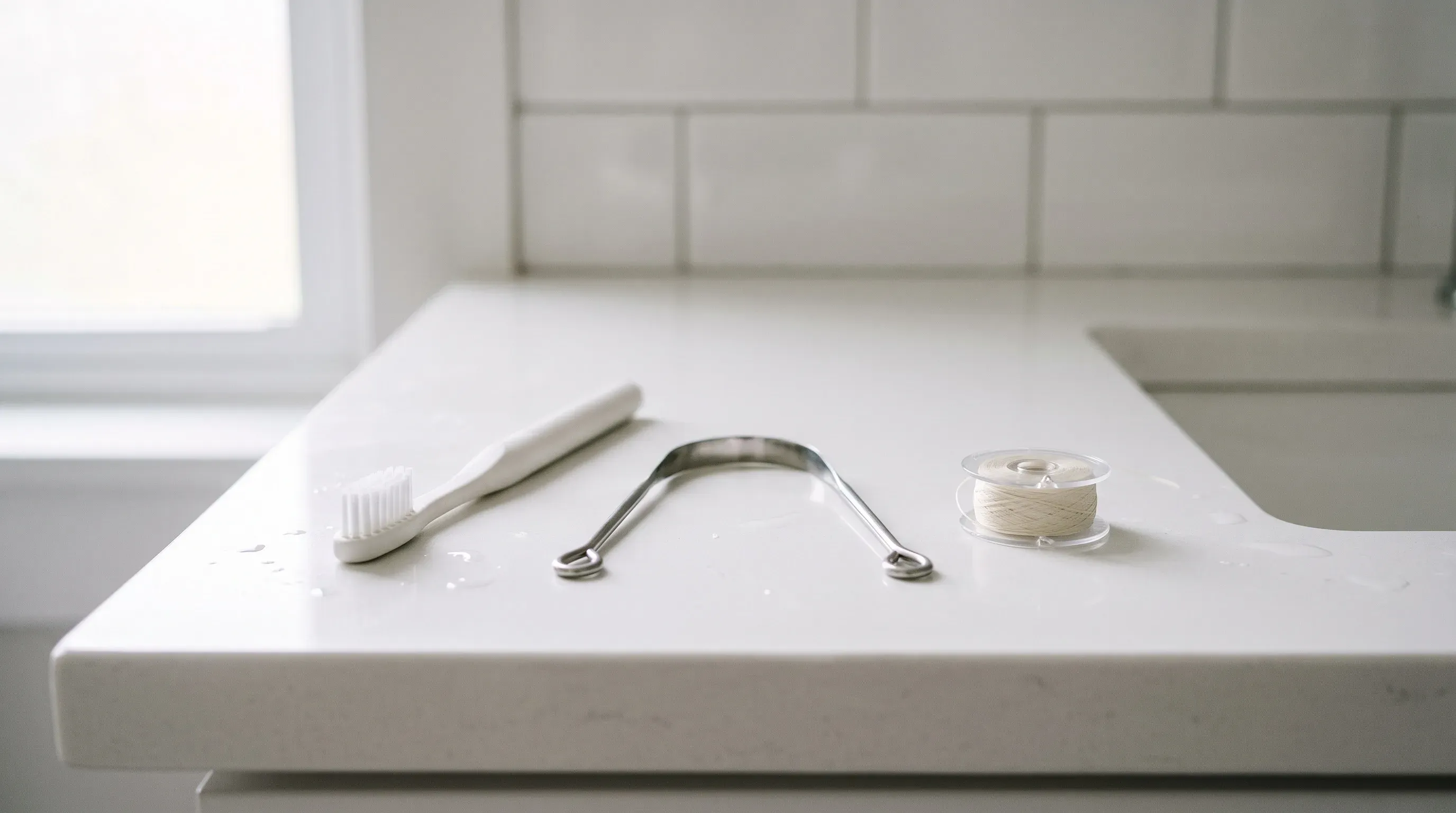
You brush twice a day. You use mouthwash. You still catch a look from someone leaning back slightly, and by mid morning the mints have stopped helping.
Bad breath gets treated as a hygiene failure, so the usual advice is to brush more. For most people that will not work, because the odor is not coming from where they are cleaning.
Where it actually comes from
Bad breath comes from bacteria breaking down proteins and releasing volatile sulfur compounds. Those are the same chemicals behind the smell of rotten eggs, and your nose detects them at very low concentrations.
Around 85 to 90 percent of chronic bad breath starts in the mouth, not the stomach. The stomach myth sends people to the wrong place: your esophagus is closed except when you swallow, so stomach odor does not drift up.
The exceptions are real but uncommon. Severe reflux, some liver and kidney conditions, and uncontrolled diabetes, which produces a distinctive fruity smell, all show up in breath. If your breath is bad most days, though, the cause is almost certainly in your mouth.
The tongue is the usual answer
The back of your tongue is not smooth. It is covered in papillae that hold a film of bacteria, dead cells, and food residue, in an area with little oxygen and little saliva flow.
Sulfur compounds form there easily, and a toothbrush passing over the front of the tongue does almost nothing to it.
If you have never cleaned the back of your tongue, start there. It makes the biggest difference for the least effort, and a scraper costs a few dollars.
The other causes, in order
Gum disease comes first. Pockets between tooth and gum let in no oxygen, and the bacteria that thrive there are the ones that produce odor. Bad breath that survives genuinely good home care, especially with bleeding gums, is one of the clearest signs of gum disease we see.
Food trapped between teeth starts breaking down overnight. If you brush faithfully but never floss, some surfaces in your mouth have not been cleaned in years.
Dry mouth matters because saliva continuously washes bacteria away. Less saliva means more odor, which is why breath is worst in the morning and why medications that dry the mouth so often bring bad breath with them. Our guide on dry mouth covers that connection.
Failing fillings and crowns can leave a gap at the margin that traps bacteria where no brush or floss reaches.
Tonsil stones are small calcified lumps in the tonsil crypts, and they smell strongly out of proportion to their size.
Smoking and vaping add their own odor, dry the mouth, and raise gum disease risk. See dental care for smokers.
Crash diets and fasting cause ketosis, which produces a sweet, acetone-like smell that no amount of brushing removes.
Garlic and onion compounds enter the bloodstream and leave through your lungs, which is why the smell lasts long after brushing. That kind is temporary and not what this article is about.
Why mints and mouthwash keep failing you
Mints cover odor for a few minutes, and most contain sugar, which feeds the bacteria causing the problem. You pay for a short truce and fund the other side.
Alcohol-based mouthwash kills bacteria briefly, then dries your mouth, and a dry mouth produces more odor. People end up rinsing more often and getting less benefit each time.
If you want a rinse, use an alcohol-free one with chlorhexidine, cetylpyridinium chloride, or zinc compounds. Those target the sulfur compounds instead of covering them. A rinse supplements cleaning and does not replace it.
What actually works
Clean your tongue every day. A tongue scraper beats a brush. Reach back as far as you comfortably can, scrape forward, rinse, and repeat three or four times. Expect a gag reflex the first few days; it settles.
Floss daily, not occasionally. The between-tooth surfaces are about 40 percent of your tooth surface area, and a brush never touches them.
Drink water through the day, since steady saliva flow is your built-in defense, and chew sugar-free gum with xylitol when your mouth feels dry.
Clean dentures and aligners properly, because they hold biofilm exactly like teeth do.
Keep your cleanings. Tartar below the gumline is unreachable at home and is a common hidden source. Our guide to what a deep cleaning is explains when the standard cleaning is not enough.
When to stop troubleshooting and come in
Give it two weeks. If you have cleaned your tongue daily, flossed daily, and stayed hydrated for two weeks with no real improvement, the cause is not your routine.
Come in sooner if your gums bleed when you brush, if you have a persistent bad taste, if one specific area smells or tastes off, or if you have noticed a metallic or fruity smell rather than an ordinary one.
At the visit we look for the source rather than treating the symptom: gum pockets measured, x-rays if we suspect an abscess or decay under a restoration, a check of existing fillings and crowns, and a look at the tongue and tonsils.
Call (352) 717-2177 or book an appointment. Neola Dental serves Minneola, Clermont, Groveland, Winter Garden, and the rest of Lake County, with a bilingual team in English and Spanish.
Frequently asked questions
Does bad breath come from the stomach?
Almost never, and this is the most persistent myth about it. Around 85 to 90 percent of chronic bad breath originates in the mouth itself. Your esophagus stays closed except when you swallow, so stomach odor does not simply drift up. There are real exceptions, including severe acid reflux, some liver and kidney conditions, and uncontrolled diabetes, which produces a distinctive fruity smell. But if your breath is bad most days, the cause is far more likely to be sitting on your tongue or under your gumline.
Why does my breath smell bad even though I brush twice a day?
Because brushing reaches teeth, and most odor is not coming from teeth. The back of the tongue holds a coating of bacteria that a toothbrush barely touches. Bacteria also live between teeth, where only floss reaches, and below the gumline in pockets that no home tool cleans. Someone who brushes well and never flosses or cleans their tongue can absolutely have persistent bad breath. The fix is usually about where you clean, not how often.
Why does mouthwash not fix my bad breath?
Mouthwash masks odor for twenty minutes to an hour, then the bacteria producing it are still there. Alcohol-based rinses make things worse over time because they dry the mouth, and a dry mouth produces more odor, so people rinse more and end up in a loop. If you use a rinse, choose an alcohol-free one with chlorhexidine, cetylpyridinium chloride, or zinc, which target the compounds rather than covering them. But a rinse is a supplement to cleaning, never a substitute.
How can I tell if my own breath smells?
You cannot smell your own breath reliably, because your nose adapts to constant odors within minutes. Cupping your hands and breathing into them does not work either, for the same reason. Better: lick the back of your wrist, let it dry for ten seconds, and smell it. Or scrape the back of your tongue with a spoon and smell the residue. The most reliable option is asking someone you trust, which is uncomfortable but honest, or asking us at your next visit.
Can gum disease cause bad breath?
Yes, and it is one of the most common causes we see. Gum disease creates pockets between tooth and gum where bacteria live without oxygen, and those are exactly the bacteria that produce the sulfur compounds behind the smell. Bad breath that persists despite genuinely good home care, especially with bleeding gums, is one of the clearest signals of gum disease we get. It also means brushing harder will not solve it, since the bacteria are below where a brush reaches.
What is the fastest way to fix bad breath?
Clean your tongue, starting today. It is the single highest-yield change for most people, because the back of the tongue is where the odor-producing bacteria concentrate, and almost nobody cleans it. Add daily flossing, drink more water, and stop relying on mints, since the sugar in them feeds the bacteria. If that combination has not improved things after two weeks, the cause is likely gum disease, a failing filling, or dry mouth, and those need a dental visit rather than a better routine.