Understanding oral cancer screening: why it matters
Learn why oral cancer screening matters. Discover risk factors, screening procedures, symptoms to watch for, and how early detection saves lives.
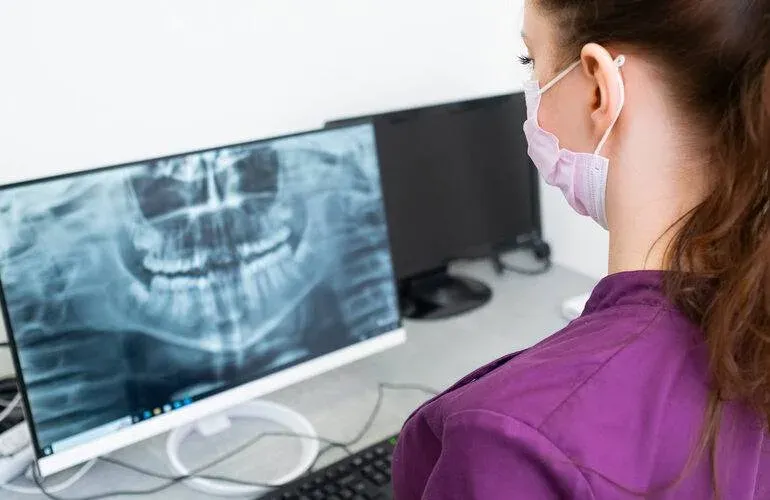
Why does oral cancer screening matter so much? Early-stage oral cancer has an 80-90% survival rate, and late-stage drops below 40%. At Neola Dental in Minneola, FL, every routine cleaning includes a complete oral cancer screening at no separate charge, with Velscope technology added when indicated. Our team explains everything in English or Spanish. We accept most major PPO plans (Delta, Aetna, MetLife, Cigna, Guardian, BCBS and more) and Medicare Advantage plans, and we offer in-house payment plans and CareCredit financing.
Call Neola Dental at (352) 717-2177 to schedule your visit. Routine cleanings include a thorough oral cancer screening.
Why oral cancer screening matters
Oral cancer affects more than 50,000 Americans each year. Roughly 10,000 die from it annually. The single biggest factor in survival is early detection. A 90-second exam during your routine cleaning can catch problems while they're still treatable.
Most oral cancers start as small, painless spots that patients don't notice. By the time symptoms appear, the cancer often has progressed. A trained dentist can identify suspicious areas months - sometimes years - before they would cause pain or other symptoms. That window is the difference between a simple biopsy and major surgery.
Who should get oral cancer screening?
Every adult should have oral cancer screening at every dental visit (twice per year). Some patients have higher risk and benefit from extra vigilance:
- Tobacco users (smoking, chewing, vaping).
- Heavy alcohol drinkers.
- Patients with a history of HPV exposure.
- People with a family history of head and neck cancer.
- Adults over 40 (risk increases with age).
- Patients with significant sun exposure (lip cancer risk).
- Anyone with a previous oral cancer diagnosis.
- Patients with persistent oral lesions, sores, or color changes.
If you have any of these risk factors, oral cancer screening matters even more for you. Tell your dentist so we can be extra thorough.
What happens during oral cancer screening
Screening is fast, painless, and non-invasive. Here's what we do at every Neola Dental visit:
Visual examination
Dr. Contreras inspects the entire mouth - lips, tongue, cheeks, gums, palate, throat. We look for color changes (white or red patches), sores that don't heal, lumps, or texture changes. Good lighting and magnification help us spot details that are easy to miss.
Palpation
We gently feel the tissues of the mouth and neck. Hard or unusual masses can sometimes be felt before they're visible.
Lymph node check
Swollen or hard lymph nodes can signal infection or, less commonly, cancer that has started to spread.
Tongue examination
Many oral cancers start on the sides or underside of the tongue. We ask you to stick out your tongue and gently move it side to side so we can see all surfaces.
History review
We ask about persistent sores, voice changes, swallowing difficulty, or chronic ear pain - all of which can be early warning signs.
Advanced Velscope technology for oral cancer detection
For patients with risk factors or suspicious findings on visual exam, we use Velscope - an advanced fluorescence detection device. Velscope uses a safe blue light that highlights tissue changes invisible to the naked eye.
How Velscope works
When the blue light shines on oral tissue, healthy areas glow green. Abnormal areas (precancerous or cancerous) appear darker. This gives Dr. Contreras a clear visual map of any concerning areas. The exam takes 1-2 minutes and is completely painless.
Velscope benefits
- Detects abnormalities BEFORE they're visible to the naked eye.
- No injections, no dye, no discomfort.
- Results visible immediately during your visit.
- Helps identify the exact margins of suspicious areas.
- Guides decisions about biopsy or referral to a specialist.
- Particularly valuable for high-risk patients.
When we recommend Velscope
- Patients with significant tobacco or alcohol history.
- Patients with previous oral lesions or cancer.
- Anyone with suspicious findings on routine visual exam.
- Patients with a strong family history of oral cancer.
- Patients who simply want the most thorough screening available.
Signs and symptoms to watch for between visits
Contact us promptly if you notice:
- A sore in your mouth that doesn't heal within 2 weeks.
- White or red patches anywhere in the mouth.
- A lump or thickening in the cheek, tongue, or gums.
- Difficulty chewing, swallowing, or moving your tongue.
- Persistent ear pain without ear infection.
- Numbness in the mouth or tongue.
- Voice changes that last more than 2 weeks.
- Loose teeth without an obvious cause.
- Persistent bad breath that doesn't respond to brushing.
- Pain with biting or chewing.
Many of these symptoms turn out to be harmless (canker sores, viral infections, mild irritation). But oral cancer screening is the only way to know for sure. Earlier evaluation always means better outcomes.
What happens if something is found?
Finding a suspicious area doesn't mean cancer. Most lesions are benign. But we never assume. The typical next steps:
- Watchful waiting - minor lesions are sometimes monitored for 2-3 weeks to see if they heal naturally.
- Photographs - we document the area to track any changes.
- Biopsy - for persistent or concerning areas, we refer to an oral surgeon for tissue sampling.
- Specialist referral - if cancer is confirmed, we coordinate with oncology, ENT, and oral surgery specialists.
Throughout the process, we explain everything in plain language. You're never left wondering what's happening or why.
Oral cancer screening cost
Routine oral cancer screening is included in every standard dental cleaning at Neola Dental - no separate cost. Most PPO dental insurance plans cover routine cleanings 100% twice per year.
Additional services like Velscope screening, follow-up exams, photographs, or biopsies have their own costs. We share all costs in writing before any additional service is performed.
- Standard oral cancer screening (included with cleaning) - covered by routine cleaning fee.
- Velscope advanced screening - entry-level added fee per exam.
- Follow-up exam after lesion identified - entry-level cost, often covered by insurance.
- Photographic documentation - small fee, often included.
- Referral for biopsy - performed by oral surgeon, separate billing.
Does insurance cover oral cancer screening?
Most PPO dental insurance plans include oral cancer screening as part of standard preventive care. Coverage usually looks like this:
- Routine cleaning + screening: covered at 100% twice per year.
- Velscope advanced screening: variable; some plans cover, others don't.
- Diagnostic photographs: variable coverage.
- Biopsy procedures: covered by dental insurance if performed by your dentist, by medical insurance if performed by an oral surgeon.
Neola Dental accepts most major PPO insurance plans. We also welcome Medicare Advantage plans with dental benefits. We verify your specific coverage before any non-routine procedure.
Please note: Neola Dental does not accept straight Medicaid. If you have Medicaid, ask about our in-house payment options.
How to reduce your oral cancer risk
Many oral cancer risk factors are modifiable:
- Don't use tobacco - smoking, chewing, vaping all dramatically increase risk.
- Limit alcohol - heavy drinking combined with tobacco multiplies risk.
- Use lip balm with SPF - sun exposure causes lip cancer.
- Get HPV vaccination if eligible - HPV causes some oral cancers.
- Eat a diet rich in fruits and vegetables - antioxidants protect cells.
- Maintain good oral hygiene - chronic inflammation may contribute to cancer risk.
- Visit your dentist twice per year - oral cancer screening matters most when done consistently.
- Self-check monthly - look at your tongue, cheeks, and roof of mouth in a mirror.
How to self-check for oral cancer signs at home
Monthly self-examination takes 2 minutes. Steps:
- Stand in good light with a small mirror.
- Look at your lips, inside and outside.
- Pull each cheek out and inspect the inside.
- Tilt your head back and look at the roof of your mouth.
- Stick out your tongue and look at top, sides, and underneath.
- Feel your jaw and neck for lumps or tenderness.
- Note any sores, color changes, lumps, or tender spots.
- Recheck in 2 weeks - anything that hasn't healed needs professional evaluation.
Self-checks don't replace professional oral cancer screening - they complement it.
Spanish-speaking oral cancer screening in Minneola
Dr. Contreras and the Neola Dental team are bilingual. Whether you prefer English or Spanish, we explain why oral cancer screening matters, what we're checking for, and any next steps. Para nuestros pacientes hispanohablantes en Minneola, Clermont y Groveland, ofrecemos exámenes de detección de cáncer oral y consultas en español.
Why choose Neola Dental for oral cancer screening
- Dentist-owned, non-corporate - Dr. Contreras personally examines every patient.
- Velscope technology available - advanced detection for high-risk patients.
- Free screening with every cleaning - no separate fee for the standard exam.
- Bilingual care - English and Spanish throughout your visit.
- Patient education - we teach you what to watch for at home.
- Coordinated specialist care - direct referrals to oral surgeons and oncologists when needed.
- Transparent pricing - any additional services itemized in writing.
Read about our general dentist team or family dental services.
Serving Minneola, Clermont, Groveland and Lake County
Neola Dental is located at 825 US-27 #104 in Minneola, FL. We're less than 15 minutes from Clermont, Groveland, Winter Garden, Montverde, and Mascotte. Patients drive to us from across Lake County and west Orange County for thorough preventive care including oral cancer screening.
Frequently asked questions about oral cancer screening
How often should I get oral cancer screening?
Twice per year - at every routine dental cleaning. High-risk patients may benefit from additional screening between regular visits.
Does oral cancer screening hurt?
No. Both visual examination and Velscope are painless and non-invasive. The whole exam takes 90 seconds to a few minutes.
How much does oral cancer screening cost?
Standard oral cancer screening is included free with your routine cleaning. Velscope advanced screening is an entry-level additional fee, sometimes covered by insurance.
What's the difference between visual exam and Velscope?
Visual exam uses good lighting and trained eyes to spot visible changes. Velscope uses fluorescent light technology to detect tissue changes that aren't visible to the naked eye - important for high-risk patients.
What if my dentist finds something suspicious?
Most suspicious findings turn out to be benign. We may watch the area for 2-3 weeks, document with photographs, or refer for a biopsy if concerns persist. We explain every step.
How soon can I schedule oral cancer screening?
Most new patient cleanings include screening and are scheduled within 1-2 weeks. Call (352) 717-2177 or book online.
Don't skip oral cancer screening. Call Neola Dental at (352) 717-2177 or schedule your cleaning online. Standard oral cancer screening is included free - and Velscope advanced detection is available when needed. In English or Spanish.